NeuroXess Builds “SimLife” Future Testbed to Advance Real-World Physical Model Strategy Powered by Neural Big Data
[Shanghai, November 16, 2026] NeuroXess recently unveiled its latest clinical exploration built upon its proprietary Fully-implanted, Fully-wireless, and Fully-functional (“Triple-F”) brain-computer interface (BCI) system. Within NeuroXess’s “SimLife” Future Testbed, clinical participants conducted multi-task continuous validations centered around four real-life scenarios: independent mobility, home living, social interaction, and work.
This advancement represents not merely an expansion of application scenarios, but marks the formal entry of NeuroXess’s neural big data real-world physical model strategy into substantive implementation. The strategy aims to leverage BCI to model human brain activity in authentic environments, investigating how individuals think and make decisions in real-world contexts to establish a foundational interface for artificial intelligence to accurately comprehend human intent.
Entering the Real Physical World: Transitioning from Single-Point Control to Continuous Tasks
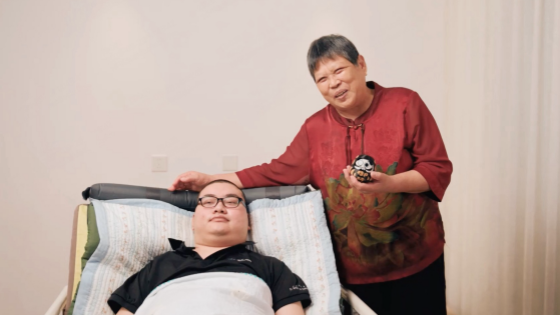
The clinical participant in this exploration, Xiao Song (a pseudonym), lives with high-level tetraplegia resulting from a traffic accident, with complete loss of voluntary movement below the elbows. Within the “SimLife” Future Testbed, powered by a dual-engine BCI+AI architecture, NeuroXess constructed an end-to-end technical pipeline spanning intent decoding, intelligent environmental perception and decision-making, and multi-device execution and feedback. Notably, core latency—from neural signal reception to decoding and control command output—remained under 50 milliseconds, robustly supporting the participant’s transition from isolated screen interactions to seamless, continuous everyday tasks.
Within this pipeline, the “Triple-F” BCI accurately decodes neural intent, while large AI models and intelligent vision systems interpret the surrounding environment and assist in decision-making. In independent mobility and shopping scenarios, the participant outputs movement commands via the BCI while the perception system recognizes traffic lights, fare gates, and shelf statuses in real time—guiding an electric wheelchair past obstacles and coordinating an exoskeleton glove for precision grasping and brain-controlled checkout. In home living scenarios, the AI system utilizes gaze tracking to identify objects of attention and orchestrates smart home (IoT) appliances; following a brain-controlled drink order, a central intelligence hub dispatches a service robot for delivery, enabling the participant to drink independently via the brain-controlled exoskeleton glove. For independent work and social engagement, the participant seamlessly operates workspace equipment, chats online with friends, conducts video calls, and engages in remote board games across physical distances.
The execution of these continuous actions relies on tight synergy between intent recognition and hardware actuation. Across multi-device switching tasks, the system achieved an intent recognition accuracy approaching 100%, while the participant maintained a success rate exceeding 95% when grasping small objects such as chess pieces using the brain-controlled exoskeleton glove. In continuous multi-step workflows—such as exiting a room, navigating obstacles, and moving forward—the participant achieved an 84% single-attempt completion rate across the entire sequence, demonstrating the system’s integrated capabilities from intent decoding and device operation to continuous task execution.
At the heart of this validation is how BCI+AI translates human intent into complex, fluid actions spanning diverse spaces and devices. Successful trials across these authentic scenarios not only confirm the practical utility of the dual-engine system across multi-domain environments, but also provide direct clinical evidence guiding NeuroXess’s exploration of real-world physical models.
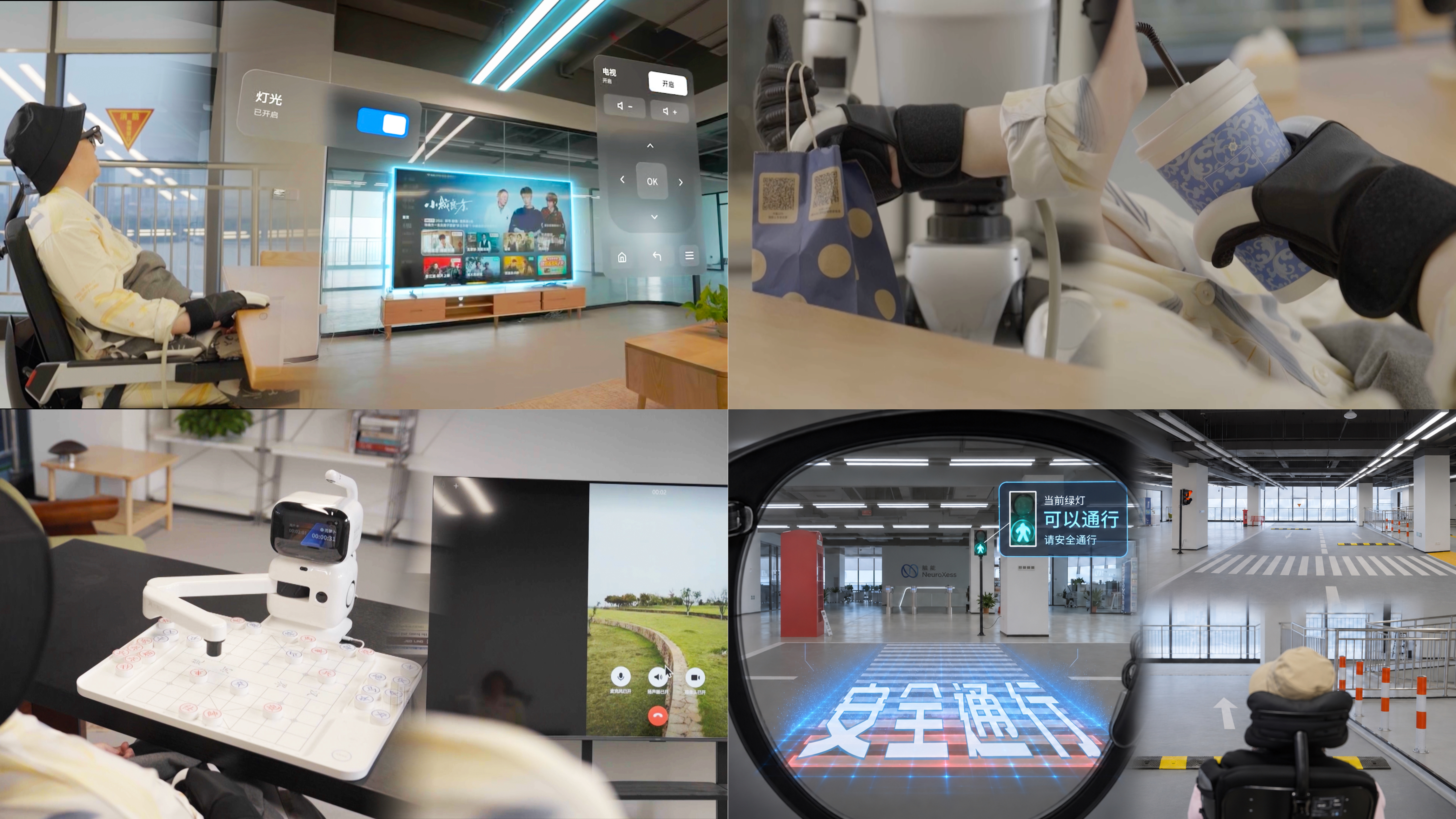
NeuroXess Future Testbed Encompasses Continuous Tasks Across Four Core Life Scenarios: Independent Mobility, Home Living, Social Connection, and Work
Exploring Real-World Physical Models: From Executing Commands to Comprehending Complex Environments
While continuous daily tasks validate the system’s interactive capabilities, constructing real-world physical models represents a higher-tier strategic objective for NeuroXess. As BCIs move beyond digital screens into the physical world, the core technical challenge shifts from accurately executing isolated commands to efficiently comprehending dynamic, complex environments.
The real physical world is filled with dynamic variables. Through ongoing interactions inside the “SimLife” Future Testbed, the system must continuously interpret contextual questions: What kind of spatial environment is the user in? Which stage of the current task has been reached? What unexpected changes have occurred in the environment or connected devices? Only by grasping this situational context can machines evolve from passive execution to proactive comprehension.
Through continuous cross-scenario interactions, the system progressively builds deep correlations connecting the user, intent, environment, hardware, and task. This unlocks a new paradigm for foundational algorithms and models: rather than relying on massive repetitive training for fixed, isolated actions (such as grasping or clicking), the system develops generalization capabilities across tasks and environments. Once accumulated with rich behavioral feedback from real-world environments, the system can transfer these learned experiences to entirely new tasks—the core purpose driving NeuroXess’s real-world physical model strategy.
This cross-scenario knowledge transfer is already evident in practical applications: after training in specific environments, transferring home control experience to novel settings such as office workspaces yielded marked improvements in intent recognition and task adaptability. Specifically, supported by the contextual understanding of real-world physical models, the average training duration required for participants to master unfamiliar continuous tasks—such as shopping—was reduced dramatically from 10.5 hours to just 2 hours, providing empirical validation for cross-scenario experience transfer and reuse.
Building on this foundation, NeuroXess aims to further integrate large AI models, embodied intelligence, and external hardware ecosystems. Real-world scenarios supply concrete deployment demands for ecosystem partners, while operational feedback generated by the models continuously drives AI evolution. Through this closed loop of real-world interaction, data feedback, and model iteration, NeuroXess is propelling BCI from a mere assistive tool into the foundational interface for next-generation human-machine interaction.
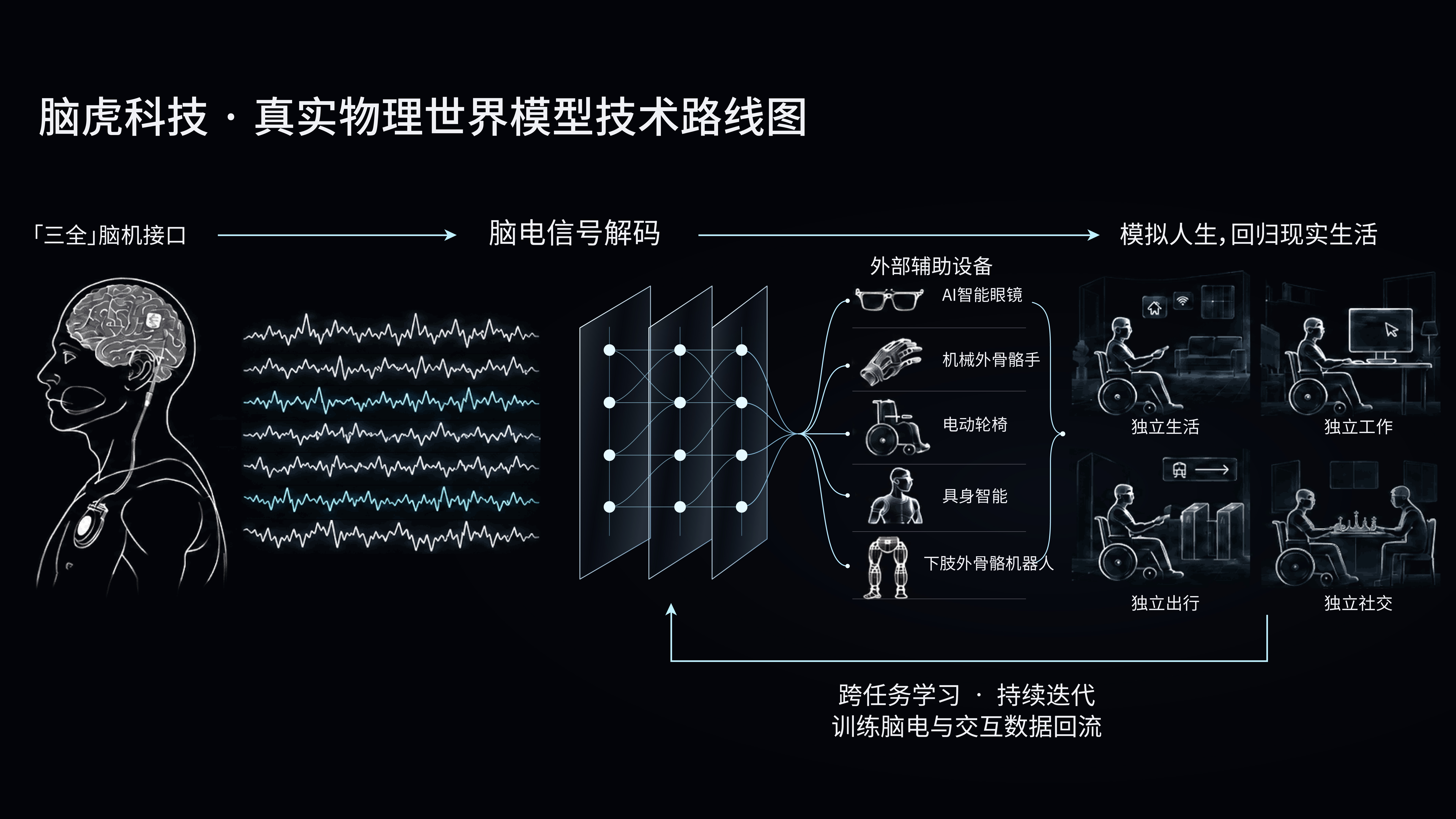
NeuroXess Real-World Physical Model Technical Roadmap
Accumulating Real-World Data and Ecosystem Synergy: Measuring Success by Tangible Patient Benefit
Authentic, multi-task interactions not only nourish model iteration, but also lay the groundwork for ecosystem synergy connecting foundation models, embodied hardware, and intelligent spaces. The testbed can accommodate up to 20 participants training concurrently and is projected to gather approximately 18,000 hours of interaction data annually, providing sustained support for training and iterating real-world physical models.
Yet regardless of model architecture or ecosystem collaboration, the ultimate benchmark remains tangible patient benefit. Whether a single operation succeeds or a specific metric improves merely measures technical capability; whether patients can autonomously manage daily routines, engage in work, travel independently, and socialize is what truly defines how technology transforms real lives. During training within the real-world physical model framework, participants’ daily caregiver-free independent activity time increased by 51%—a direct testament to this guiding principle.
The “SimLife” Future Testbed brings the challenges of future real-world deployment into the present, allowing participants to explore functional autonomy and build a foundation for more complex applications ahead. In turn, this continuously accumulated real-world interaction data feeds back into upgrading the testbed’s scenarios and systems. This closed loop—originating from reality and returning to reality—ensures that every training session brings participants closer to authentic everyday living.
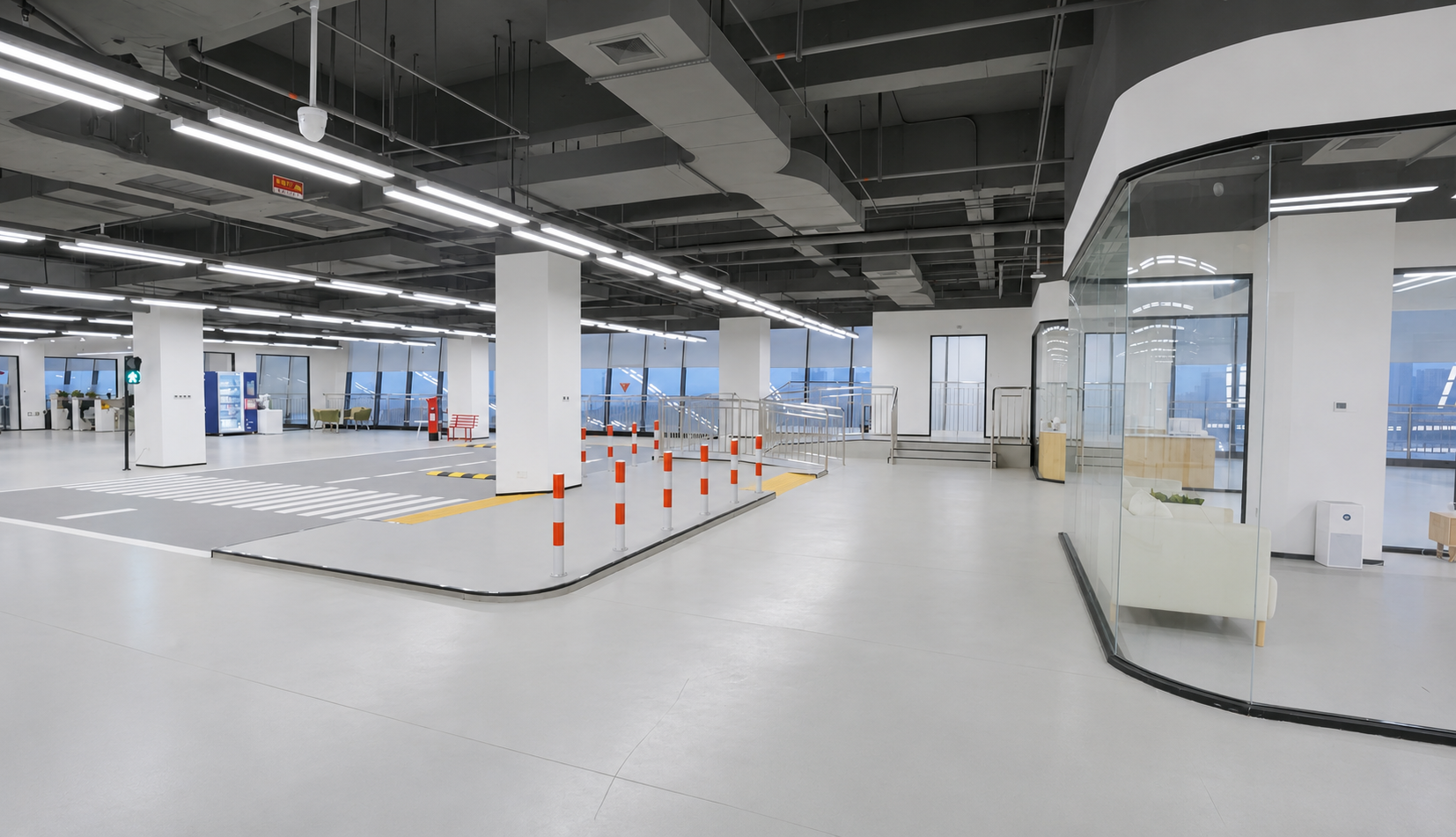
NeuroXess “SimLife” Future Testbed
Dr. Tiger H. Tao, Founder, CEO, and Chief Scientist of NeuroXess, stated: “Our objective is to build physical models of the human brain operating in authentic environments. The ‘SimLife’ Future Testbed grounds this frontier exploration in real-world interaction, enabling machines not only to understand the brain, but also to comprehend the world. While we are actively connecting with AI and embodied intelligence ecosystems, no matter how far technology advances, our ultimate destination remains tangible benefit for patients. Through this exploration, we hope to empower patients with greater autonomy and choice across daily living, work, mobility, and social connection.”
From decoding human intent to understanding the physical world humans inhabit, and ultimately returning to human well-being: backed by the “SimLife” Future Testbed and BCI+AI technologies, NeuroXess is accumulating neural big data through authentic interactions and advancing its real-world physical model strategy, unlocking new possibilities for next-generation human-machine interaction.