Shanghai-Jiangxi Collaboration, “Move” Toward the Future: Tetraplegic Participants Complete an 800-km Chinese Chess Match via NeuroXess “Triple-F” BCI
[Shanghai/Nanchang, June 2026] NeuroXess recently unveiled its latest clinical progress: two participants with high-level tetraplegia completed an 800-kilometer Chinese chess match via brain-computer interface (BCI). The match took place between Xiao Zhang in Shanghai and Mr. Deng in Nanchang, both participants in clinical trials of NeuroXess’s proprietary Fully-implanted, Fully-wireless, and Fully-functional (“Triple-F”) BCI system.
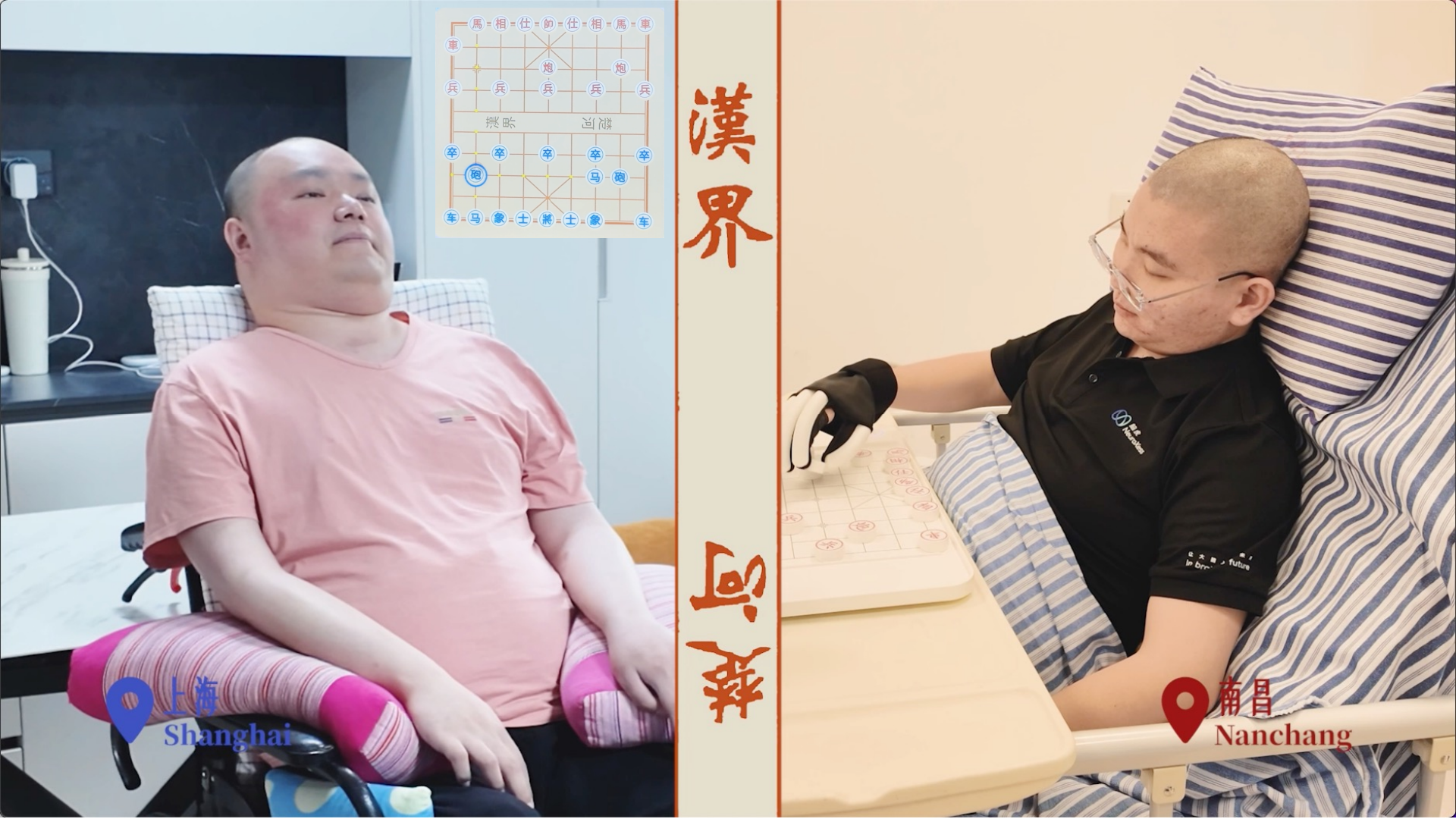
Two tetraplegic participants completed an 800-km Chinese chess match via brain-computer interface
Xiao Zhang in Shanghai used the BCI to navigate a virtual chessboard, selecting and placing pieces with his thoughts. The commands were transmitted in real time to a compact robotic arm in Nanchang, which executed the moves on a physical chessboard. Meanwhile, Mr. Deng in Nanchang manipulated physical chess pieces via a brain-controlled exoskeleton glove to play against the robotic avatar representing Shanghai. Throughout the entire match, both participants across distant locations executed every move relying entirely on their neural signals.
Following the match, assisted by the exoskeleton glove, Mr. Deng wrote the Chinese characters for “Success” (成功) with a calligraphy brush. Those two characters on paper marked not only the conclusion of this clinical demonstration between Shanghai and Jiangxi, but also a poignant testament to functional recovery: from being unable to hold a pen to writing with ease, technological breakthroughs ultimately translate into tangible real-world abilities.
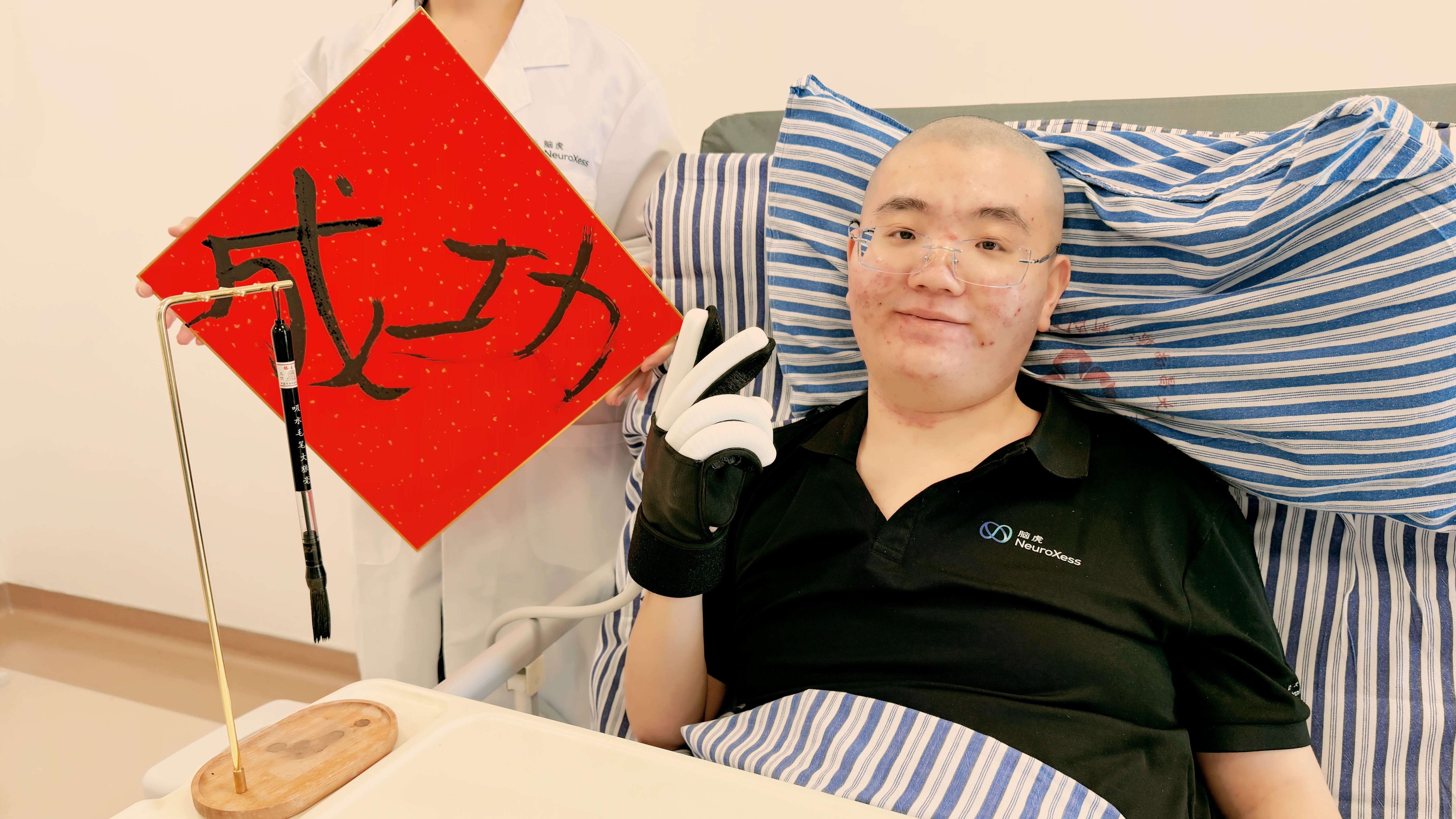
Mr. Deng writing the characters for “Success” with a calligraphy brush
Xiao Zhang has lived with high-level tetraplegia for eight years, with complete paralysis below his shoulders. In October 2025, he underwent the first clinical implantation of the “Triple-F” system at Huashan Hospital Affiliated to Fudan University. By postoperative day 5, he achieved brain-controlled cursor movement; after 17 days of training, his information transfer rate reached 5.2 BPS, surpassing average healthy individuals. Today, he can browse the web, play video games, and operate electric wheelchairs and smart home devices via the BCI, and has even independently shopped for holiday gifts and sent digital red envelopes, fully re-integrating into everyday family life.
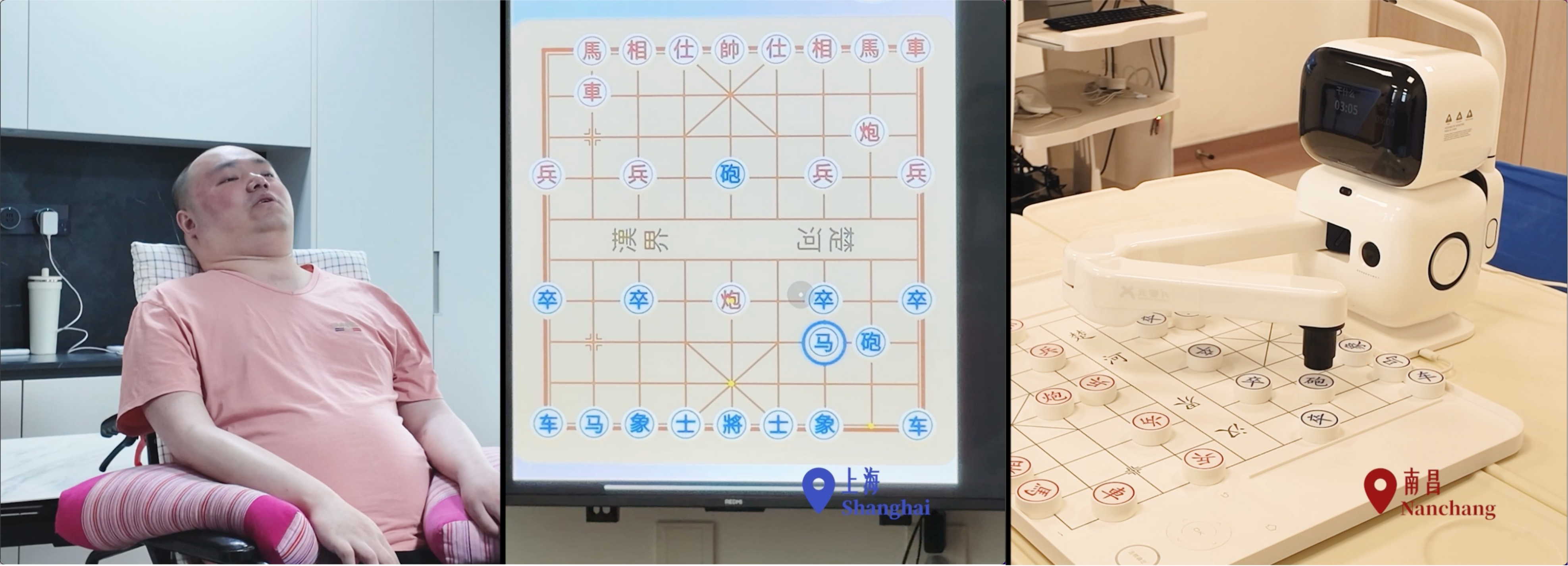
Xiao Zhang brain-controlling virtual chess moves & commands synchronized in real time to the robotic avatar in Nanchang
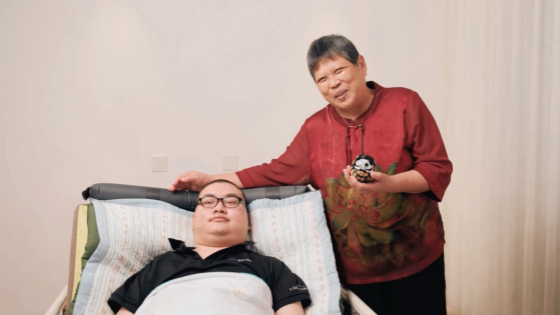
Mr. Deng was formerly an art teacher who sustained high-level tetraplegia in an accident, nearly completely losing hand motor function. In December 2025, guided by Huashan Hospital, he underwent the second implantation of the “Triple-F” system at the First Affiliated Hospital of Nanchang University. One month post-surgery, he was able to eat, drink, and write with the assistance of a brain-controlled exoskeleton. In April 2026, leveraging BCI-FES (Functional Electrical Stimulation) technology, he succeeded in grasping a pen with his own hand to draw, creating a family portrait. Transitioning from someone dependent on round-the-clock care to holding a pen once again, Mr. Deng’s progress offers a compelling illustration of clinical translation.
Following the match, assisted by the exoskeleton glove, Mr. Deng wrote the Chinese characters for “Success” (成功) with a calligraphy brush. Those two characters on paper marked not only the conclusion of this clinical demonstration between Shanghai and Jiangxi, but also a poignant testament to functional recovery: from being unable to hold a pen to writing with ease, technological breakthroughs ultimately translate into tangible real-world abilities.
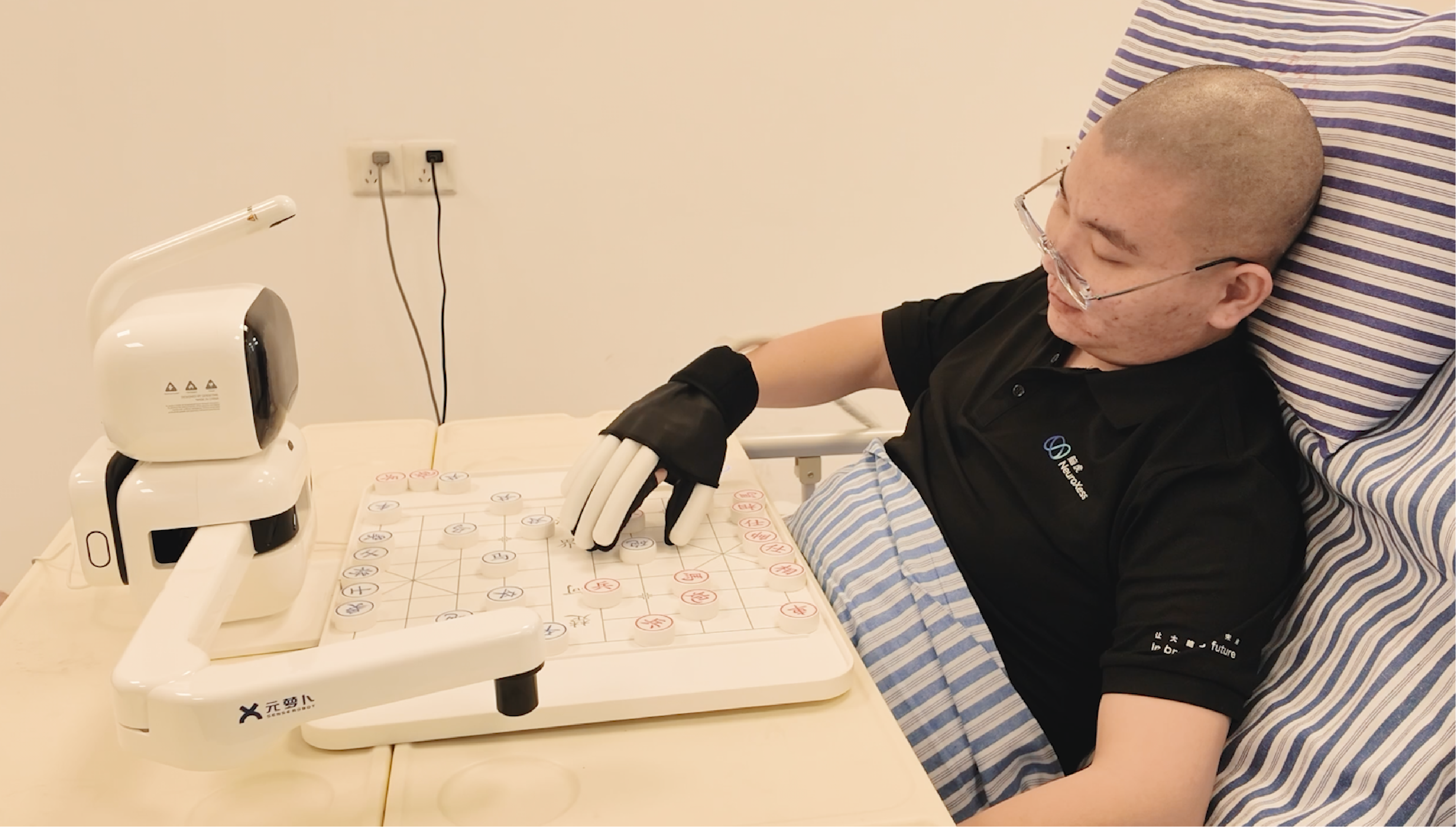
Mr. Deng moving chess pieces via the brain-controlled exoskeleton glove
The core advantages of the “Triple-F” BCI system lie in being “No Brain Harm, No Thermal Risk, Clinically Scalable.” The system places flexible cortical electrodes on the cerebral surface rather than penetrating brain parenchymal tissue, fundamentally averting neural trauma; it positions heat-generating units such as batteries and processing units subcutaneously in the chest, keeping thermal sources distant from the brain to ensure long-term safety; and the surgery adapts the well-established Deep Brain Stimulation (DBS) surgical paradigm without requiring dedicated surgical robots, enabling scalable translation from elite medical centers to broader regional hospitals. It is precisely this robust technical foundation that makes every brush stroke and chess move possible.
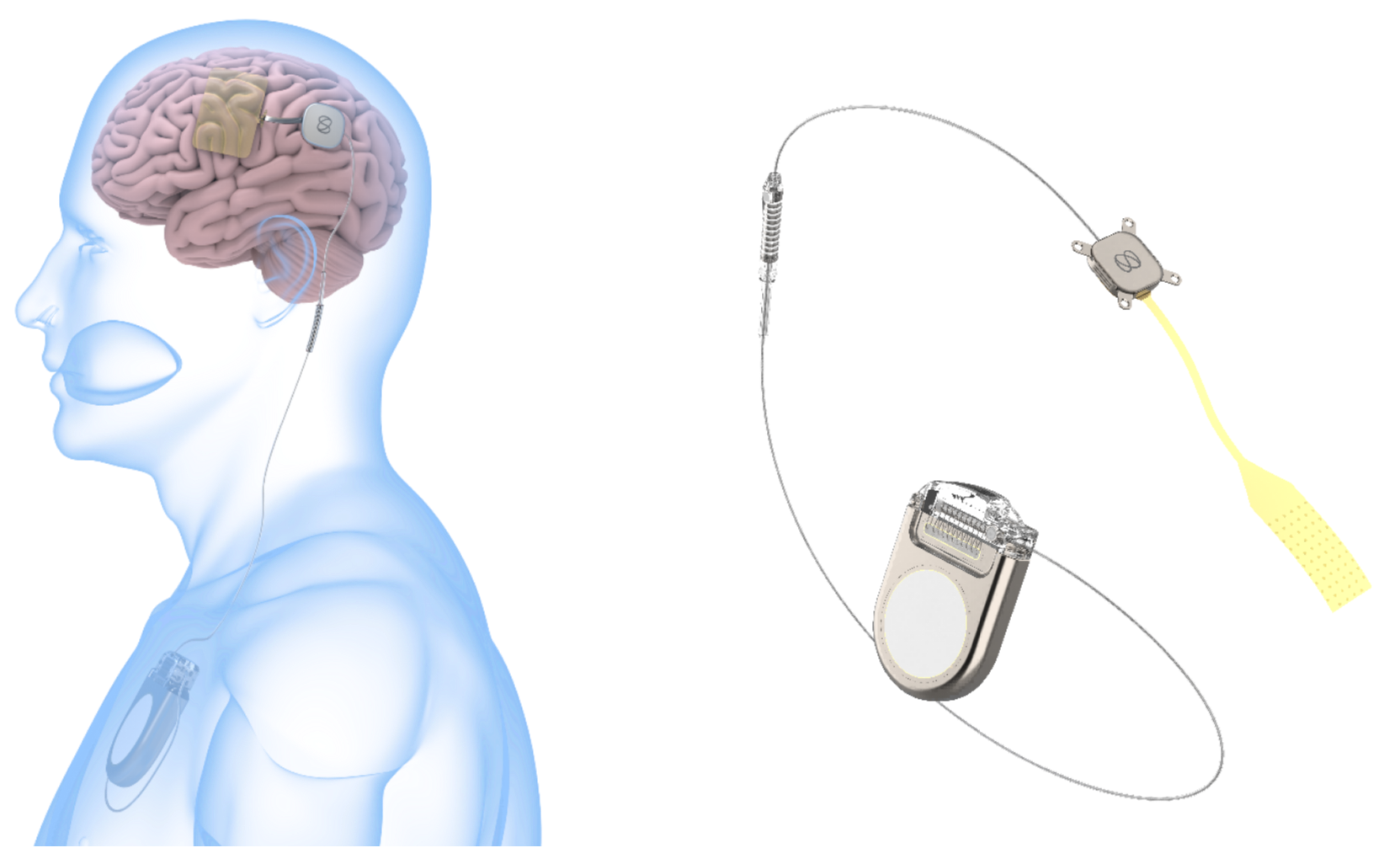
NeuroXess “Triple-F” BCI System: No Brain Harm, No Thermal Risk, Clinically Scalable
This “Shanghai-Jiangxi Collaboration: Brain-Controlled Chess Match” brought the clinical progress of both participants together into a single board game. Brain-controlled piece selection in Shanghai, alongside robotic placement and exoskeleton gripping in Nanchang, seamlessly integrated three technological modalities. Together, they demonstrated the complete capability pipeline of BCI—from neural signal decoding to external device control, and ultimately to assisting the patient’s own limb movements.
NeuroXess has consistently adhered to a dual-hub strategy of “R&D in Shanghai, Manufacturing in Jiangxi,” with its Giga-factory in Jiangxi’s Ganjiang New District accelerating industrial production. Dr. Tiger Tao, Founder and Chief Scientist of NeuroXess, emphasized that everyday actions like playing chess or writing represent a genuine “return to life” for tetraplegic individuals. The ultimate measure of technological breakthrough is whether patients can truly re-engage with life.
One chess game unites inter-provincial collaboration; one move drives a new beginning for life. Moving toward the future is transitioning from a vision into reality.