NeuroXess’s “Triple-F” BCI System Enters NMPA Special Review Procedure for Innovative Medical Devices
[Shanghai, July 2026] NeuroXess announced today that its proprietary “Implantable Brain-Computer Interface System for Hand Motor Function Compensation”—the Fully-implanted, Fully-wireless, and Fully-functional (“Triple-F”) BCI system—has passed public notice and officially entered the Special Review Procedure for Innovative Medical Devices organized by the Center for Medical Device Evaluation (CMDE) of the National Medical Products Administration (NMPA). As the first subdural implantable flexible BCI product in China to enter this “green channel,” this milestone signifies a major leap forward in China’s innovation within high-end implantable medical devices.
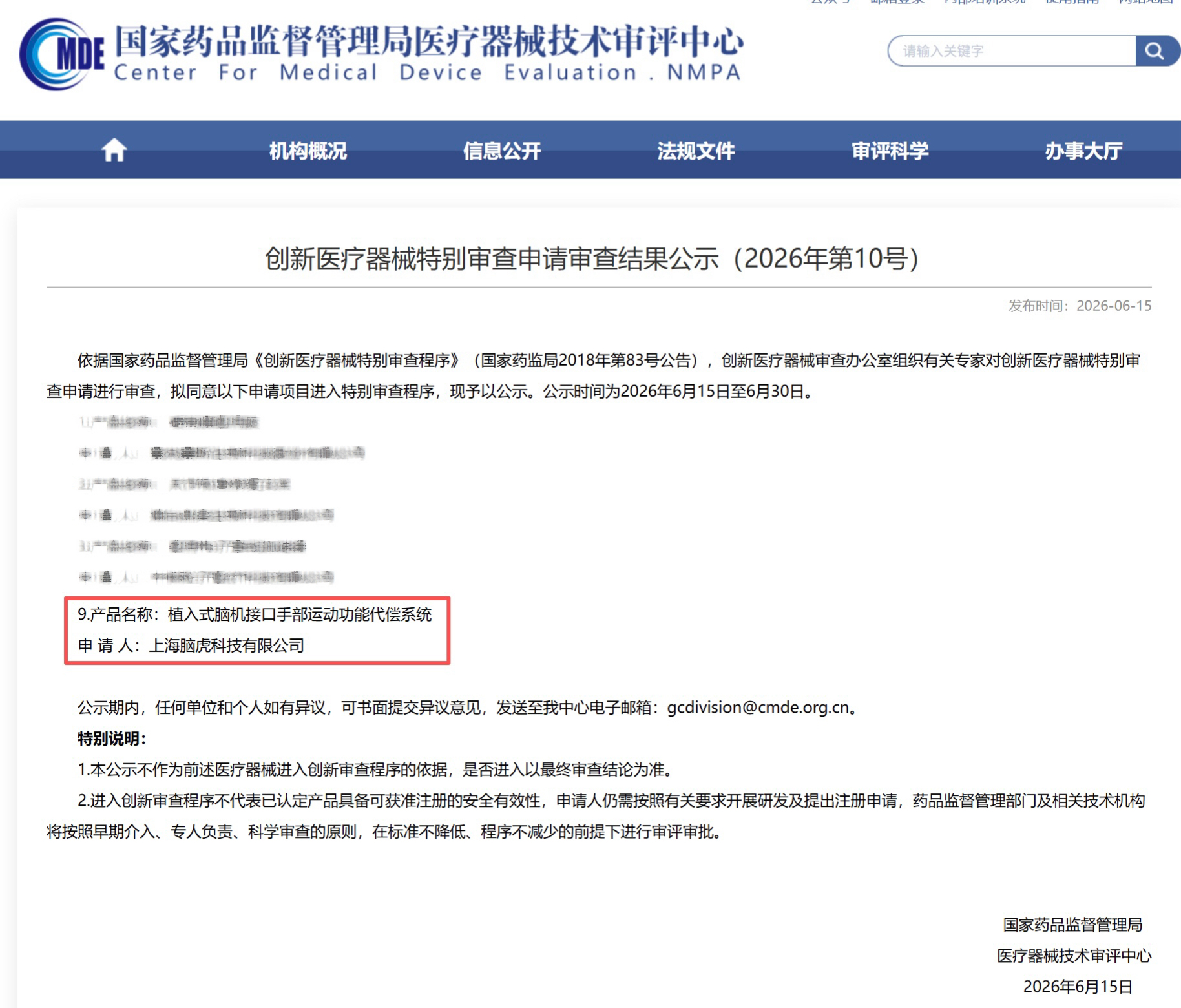
Public Notice of Review Results for Innovative Medical Device Special Review Applications
On July 7, 2026, the system officially initiated its GCP registered clinical trial at Huashan Hospital Affiliated to Fudan University, becoming the first subdural cortical-surface implantable BCI in China to enter the registered clinical phase for Class III medical devices. Led by the team of Professor Ying Mao, President of Huashan Hospital, as the Principal Investigator, this multi-center GCP trial is conducted collaboratively across 15 Grade-A tertiary hospitals nationwide. Clinical data generated will be directly applied toward the Class III medical device registration filing with the NMPA, significantly expediting product market approval. This dual breakthrough marks a decisive transition for China’s flexible BCI technology from scientific exploration to scaled clinical translation and regulatory commercialization.
Highly Aligned with Regulatory Policies: Accelerating Compliant Commercialization of Innovative Devices
The NMPA Special Review Procedure for Innovative Medical Devices (the “green channel”) is established to encourage medical device research and innovation while accelerating the adoption of emerging technologies. Qualified products must possess core invention patents, demonstrate substantial clinical value, and feature leading technologies by international standards.
On June 30, 2026, the NMPA released the Guidelines for Classification and Definition of Brain-Computer Interface Medical Devices and the Guidelines for Generic Naming of Brain-Computer Interface Medical Devices, explicitly classifying invasive and implantable BCIs under the highest standard—Class III medical devices. NeuroXess’s technical roadmap aligns seamlessly with the new regulatory framework. This synergy not only validates the company’s foresight in regulatory compliance, but will also accelerate its evaluation through the “green channel,” facilitating the timely, compliant commercialization of this cutting-edge device.
A Safer, More Precise Technical Pathway: Non-damaging to Brain Tissue, Thermal-safe, and Scalable
NeuroXess’s “Triple-F” BCI system utilizes a subdural implantation approach that places flexible electrodes directly on the cortical surface without penetrating brain parenchymal tissue, ensuring high-fidelity neural signal acquisition while maximizing cortical safety.
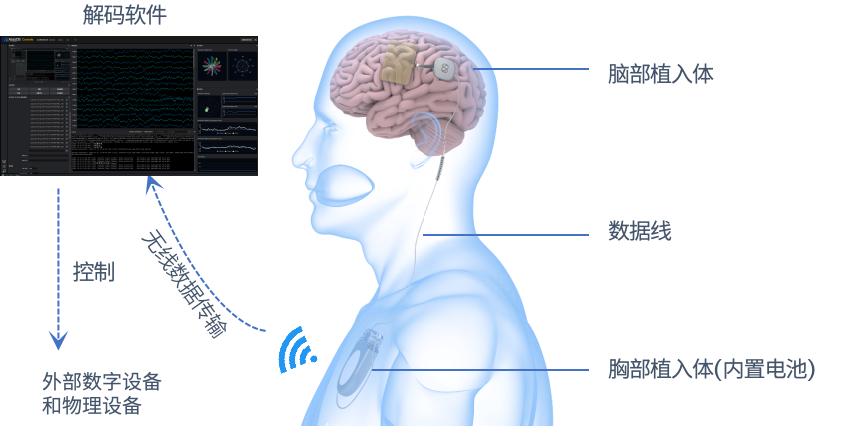
NeuroXess “Triple-F” BCI System: No Brain Harm, No Thermal Risk, Clinically Scalable
As China’s first and the world’s second fully implanted BCI system featuring an internal battery, its split-body architecture places heat-generating units—such as the battery and processing modules—subcutaneously in the chest. By isolating thermal sources from the brain, it eliminates potential neural impacts from local temperature rise, significantly enhancing long-term safety. With zero percutaneous transcutaneous cables, rapid wireless charging sustains daily usage, completely liberating patients from external hardware tethering. Furthermore, the surgical procedure adapts the well-established Deep Brain Stimulation (DBS) paradigm without requiring specialized surgical robots, ensuring high clinical reproducibility and broad adoptability.
Clinical Evidence: Fine Motor Function Restoration and Markedly Improved Quality of Life
The “Triple-F” BCI system has achieved successful human implantation across multiple participants, validating robust system stability and reliable safety profiles:
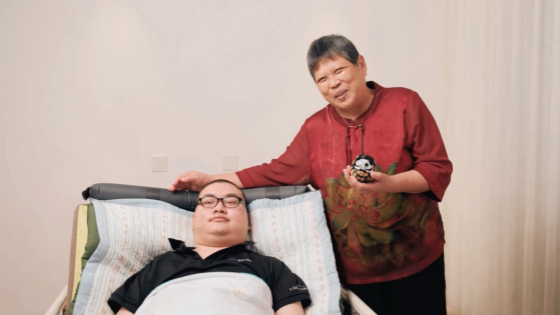
Postoperative follow-up exceeding six months in a Shanghai participant (age 28, high-level tetraplegia resulting from a C3 spinal cord injury) demonstrated stable neural signal fidelity and a decoding accuracy reaching 96.1%. The participant successfully achieved brain-controlled web navigation, gaming, and wheelchair maneuvering, and demonstrated discrete single-finger motor control via an exoskeleton glove.
A four-month postoperative follow-up in a Nanchang participant (age 26, high-level tetraplegia from a C4 spinal cord injury) revealed a decoding accuracy of 91.2%. Utilizing a brain-controlled exoskeleton glove, the participant regained the ability to eat independently, hold a pen to draw, and even leveraged BCI-FES (Functional Electrical Stimulation) technology to sketch a family portrait and write birthday greetings by hand.
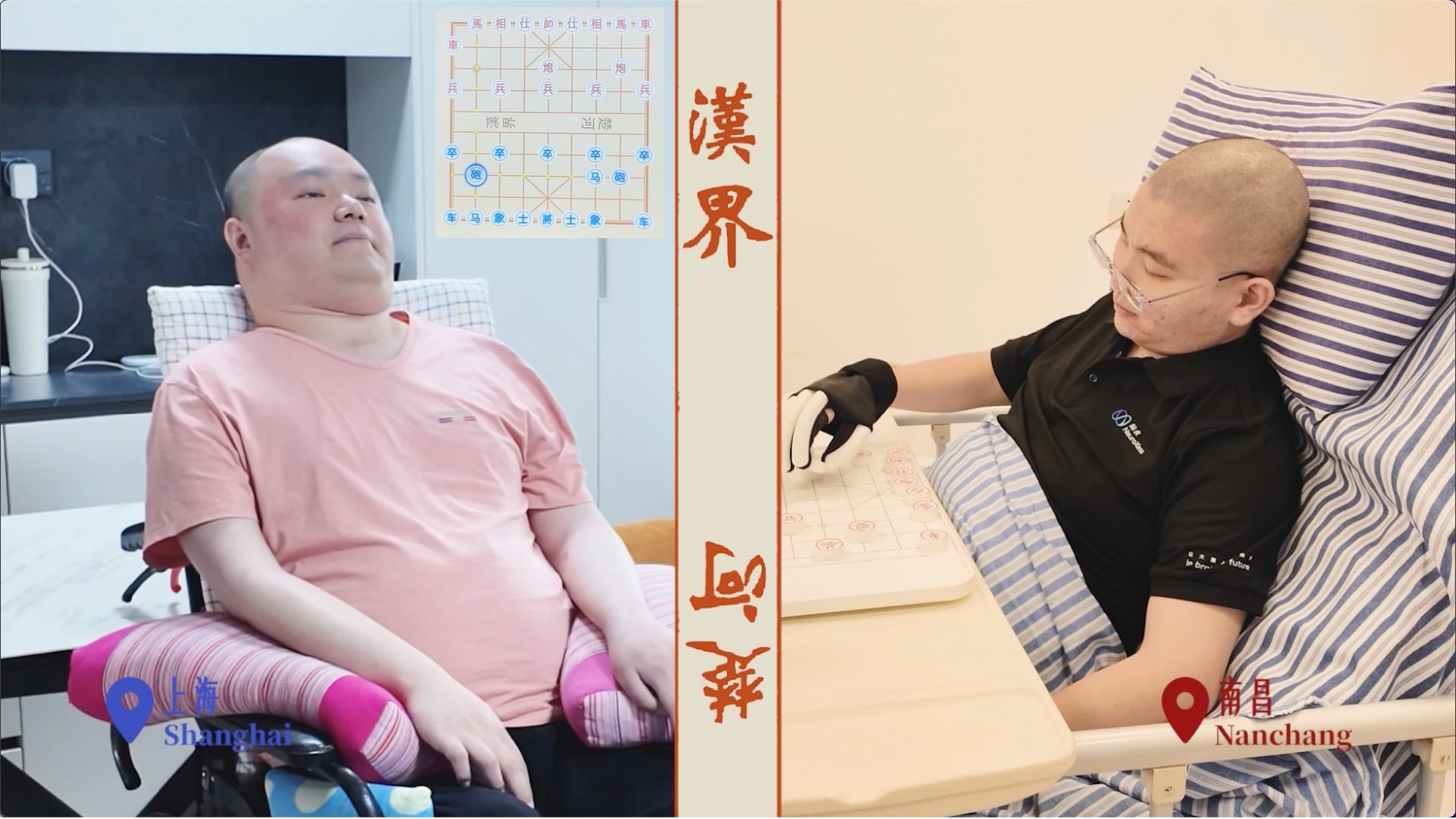
In June 2026, the NeuroXess “Triple-F” BCI system achieved a landmark clinical milestone: two tetraplegic participants, located in Shanghai and Nanchang respectively, engaged in a Chinese chess match across an 800-kilometer distance using neural signals alone. The Shanghai participant navigated a virtual chessboard via brain control, wirelessly commanding a robotic avatar in Nanchang to place pieces in real time; meanwhile, the Nanchang participant manipulated physical chess pieces using a brain-controlled exoskeleton glove. This accomplishment represents the first remote brain-controlled interaction between tetraplegic individuals in China, marking a shift for implantable BCIs from controlled laboratory cursor tasks to dynamic, real-world applications that restore social connection and everyday agency.
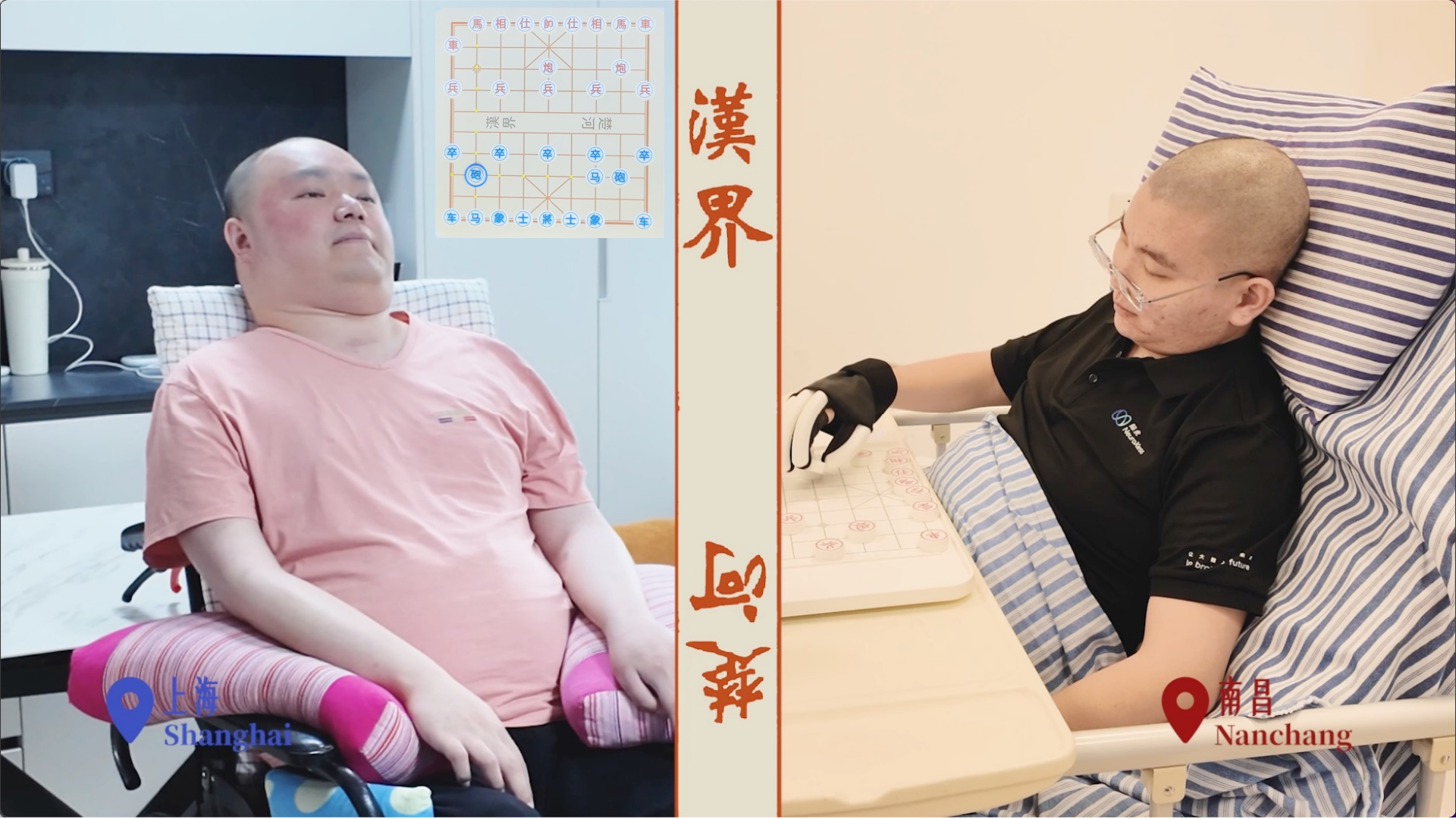 Two Tetraplegic Participants Play an 800-km Remote Chinese Chess Match via Brain-Computer Interface
End-to-End In-House R&D: From Electrodes to Algorithms, from Clinics to Mass Production
Committed to proprietary end-to-end research and development, NeuroXess has conducted over 60 clinical trials and supported more than 70 leading research and medical institutions across China. In its industrial expansion, the “Giga-factory” situated in Jiangxi’s Ganjiang New District is scheduled to commence operation in the second half of 2026, targeting stable annual delivery capacity of tens of thousands of units. The dual-core operational strategy of “R&D in Shanghai, Manufacturing in Jiangxi” is transitioning from roadmap to reality.
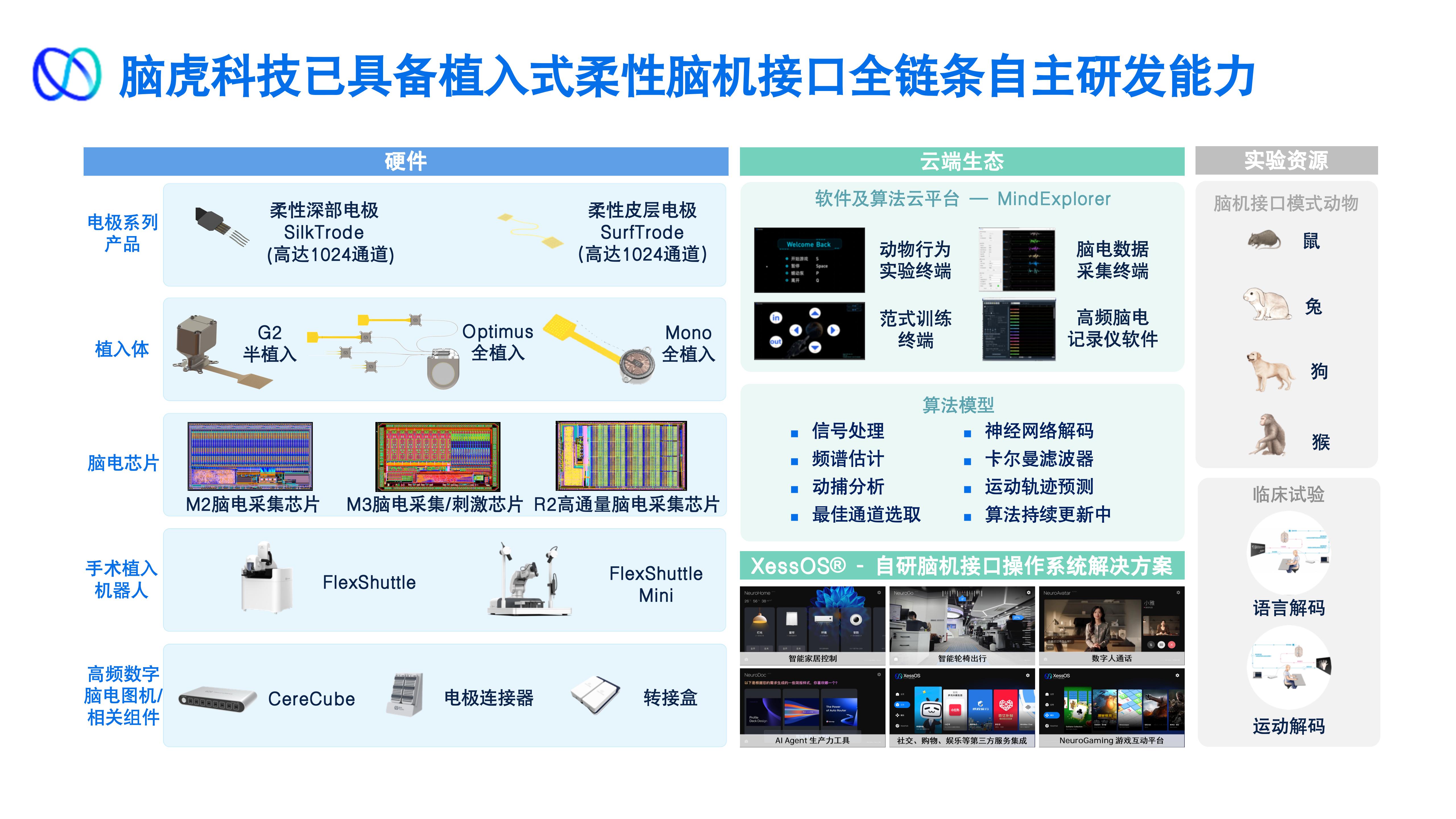 NeuroXess Possesses Full-Stack End-to-End Proprietary R&D Capabilities for Implantable Flexible BCI
Admission into the Special Review Procedure for Innovative Medical Devices represents authoritative validation of NeuroXess’s innovation in high-end implantable medical equipment. Dr. Tiger Tao, Founder, CEO, and Chief Scientist of NeuroXess, stated: “We will use this momentum to accelerate multi-center clinical trials and regulatory approval, enabling this safer, more precise, and highly accessible BCI solution to benefit patients as swiftly as possible.”