NeuroXess Achieves Second in-Human “Triple-F” BCI-FES Closed-Loop Control, Enabling Direct Limb Movement in Paralyzed Patient
NeuroXess announced a second in-human clinical milestone for its fully implantable, fully wireless, fully functional (“Triple-F”)brain-computer interface (BCI) system. By integrating sub-50ms end-to-end latencywith BCI-driven functional electrical stimulation (BCI-FES), the system enabled a29-year-old high-level spinal cord injury (SCI) patient—a former art teacher—to regainautonomous hand control for eating, writing, and painting within one monthpost-implantation. This marks the first clinical demonstration in China of a closed-loopBCI-FES system restoring direct voluntary limb movement, transitioning the technology from proof-of-concept to clinically deployable and reproducible application.
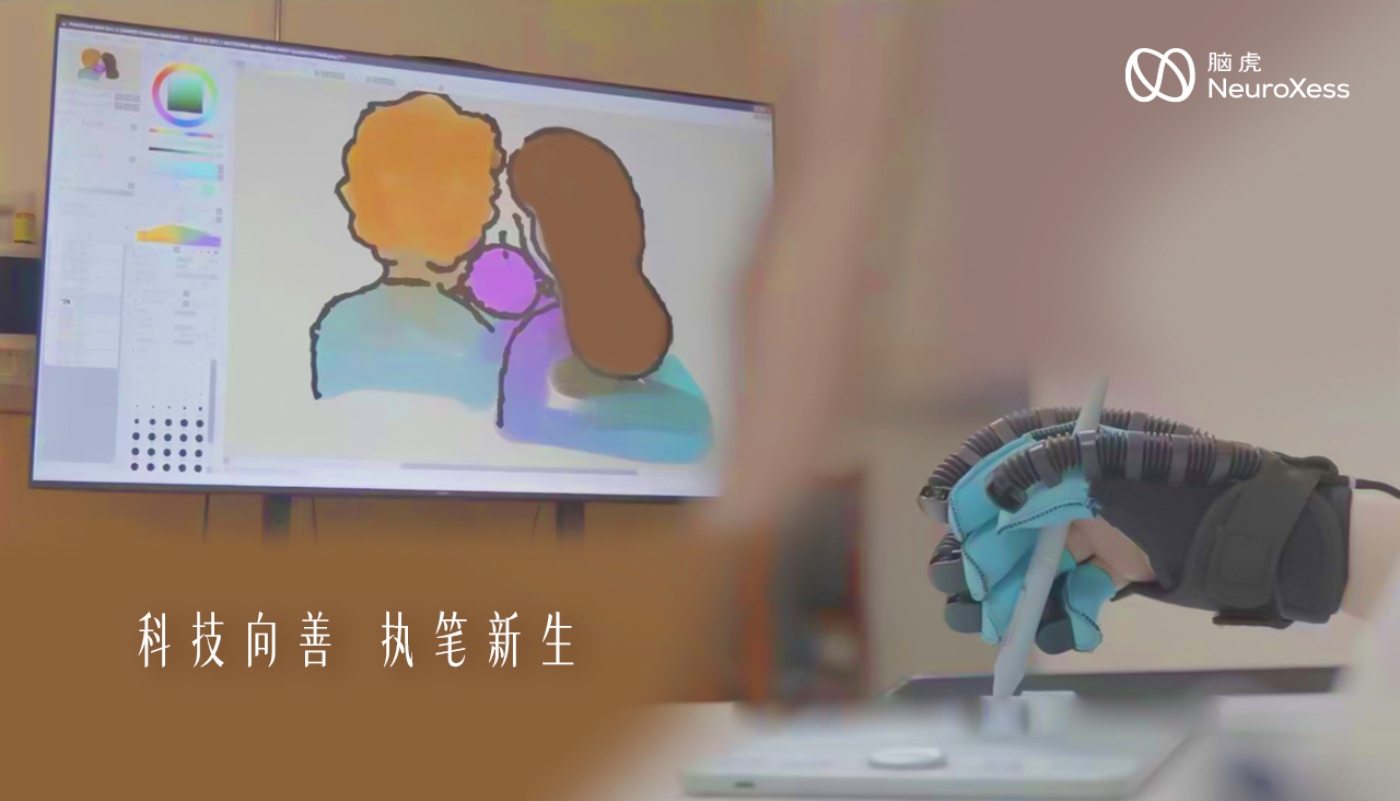
The second “Triple-F” BCI patient uses neural-controlled exoskeleton assistance to hold a brush and paint a family portrait.
The NeuroXess “Triple-F” system employs a flexible cortical electrode array positionedsubdurally over the motor cortex, capturing neural signals without parenchymalpenetration. The surgical approach leverages established deep brain stimulation (DBS)protocols, enhancing reproducibility across neurosurgical centers. A split-body designisolates the battery and telemetry module in a subcutaneous chest pocket, thermallydecoupling power electronics from the intracranial space—a critical safety featuredistinguishing it from fully integrated cranial implants. As China’s first fully implantable, battery-powered BCI system, “Triple-F” enables tether-free operation with transcutaneous wireless charging for daily use.
On the technical side, end-to-end system latency—from neural signal acquisitionthrough motor intention decoding, wireless command transmission, to FES-mediatedmuscle activation—remains below 50 milliseconds. This approaches the perceptual threshold for sensorimotor feedback integration, delivering a near-natural brain-controlled experience comparable to physiological motor response times. This performance sets a new latency benchmark for implantable BCI systems targeting direct limb control, where real-time precision is clinically critical.
This trial represents the first-in-China clinical validation of a complete “neural intention–decoding–FES stimulation–voluntary action” closed loop. High-densityECoG electrodes capture and decode motor cortex activity in real time, and commandsare transmitted wirelessly to a multi-channel FES system that recruits peripheral motorunits, producing coordinated finger flexion and extension. Clinical validation at 30 days post-op demonstrated independent precision grasping of the affected hand, autonomous execution of writing and painting tasks, and functional return of control to the patient’s own limb rather than an external proxy.
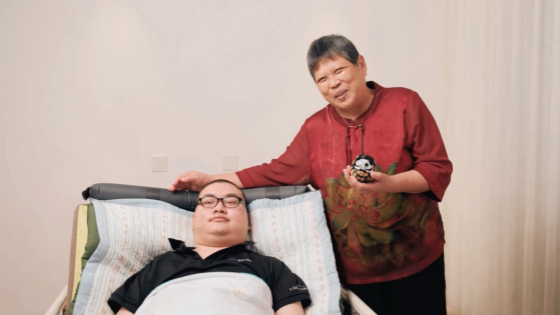
For the 29-year-old patient—a new father and former art teacher—the BCI-FES system restored not only motor function but social and professional identity. Using his own hand,he achieved autonomous feeding without caregiver assistance, wrote greeting cards,and painted a family portrait. The system enabled his transition from passive care recipient to active father and artist, returning warmth and meaning to moments of family companionship that illness had taken away.
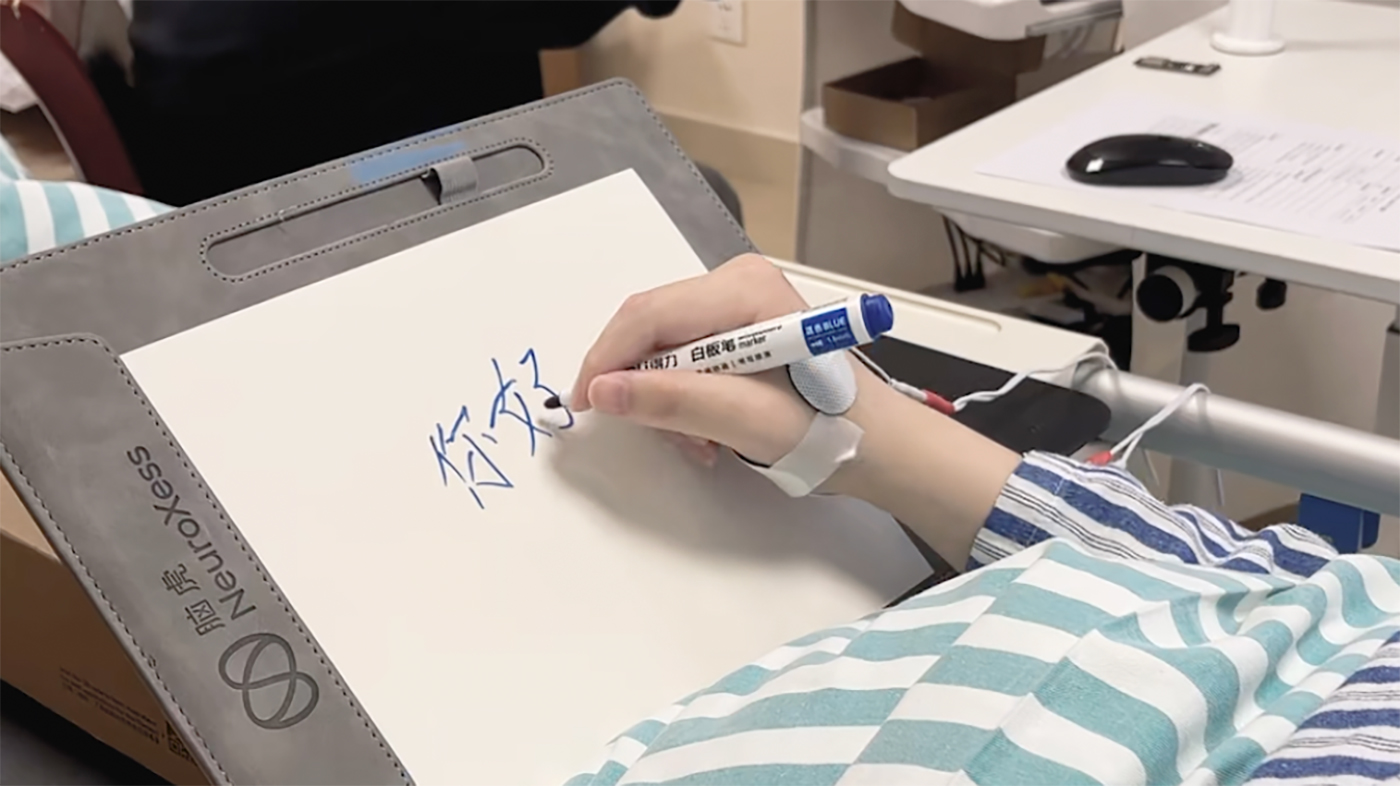
The patient achieves autonomous pen holding and writing through BCI-FES technology,demonstrating direct functional restoration of hand control.
As the second “Triple-F” implantation with consistent cross-subject performance, thiscase validates system stability across individual neuroanatomical variation, surgicalreproducibility using standardized DBS-derived protocols, and clinical generalizabilitynecessary for multi-center pivotal trials. The establishment of “fully wireless, ultra-lowlatency, closed-loop control” as a technical standard positions the “Triple-F” platformfor global neurorehabilitation applications.
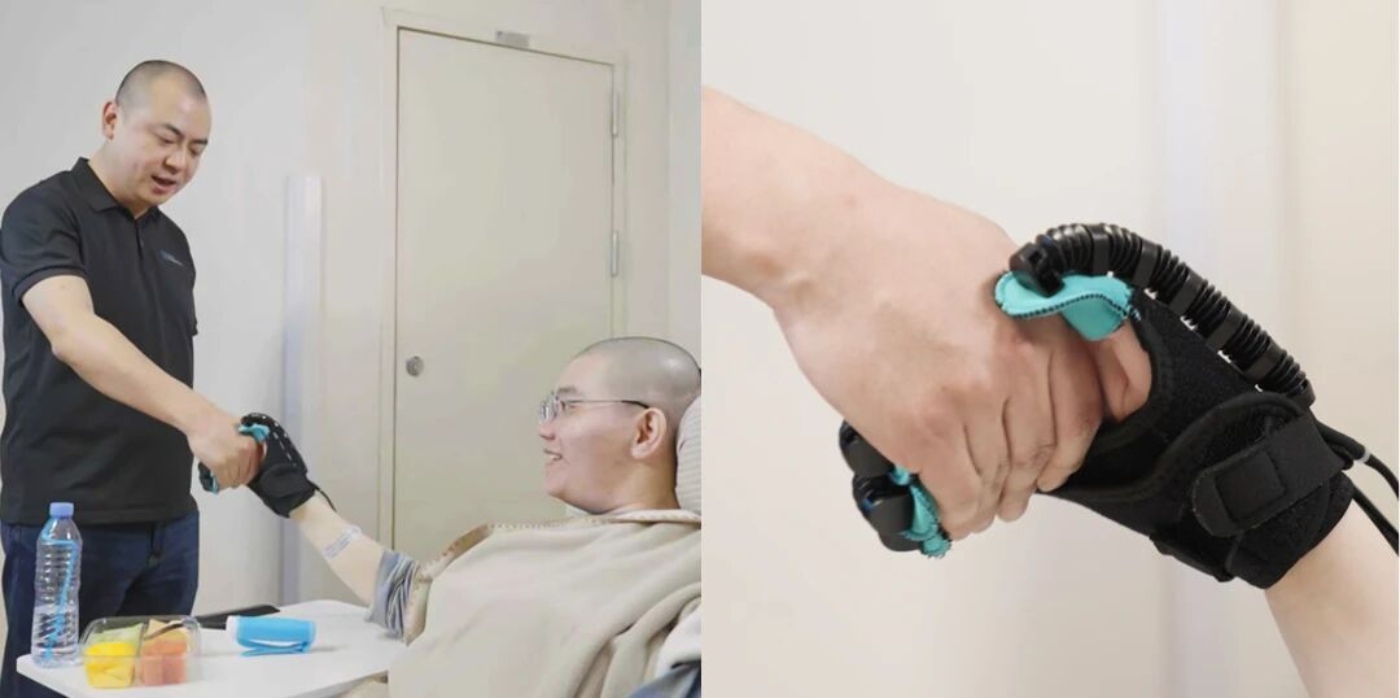
Dr. Tiger H. Tao, Founder and Chief Scientist of NeuroXess (left), shakes hands with the patient,who is using neural-controlled exoskeleton assistance.
Tiger H. Tao, Ph.D., Founder and Chief Scientist of NeuroXess, said: “Case one provedfeasibility. Case two proves usability and replicability. Our trajectory from controllingexternal machines to driving the patient’s own limb reflects our core design philosophy:every iteration must address unmet clinical needs. We are not building betterwheelchairs—we are rebuilding the neural bridge between brain and body.”