NeuroXess Pronounced Latest Progress in “Triple-F” BCI: From “What You Think Is What You Get” to “What You See Is What You Control”
[Shanghai, September 30, 2026] NeuroXess recently disclosed the latest clinical exploration progress of its proprietary “Triple-F” (Fully-implanted, Fully-wireless, and Fully-functional) brain-computer interface (BCI) system. Leveraging this system in conjunction with artificial intelligence (AI) large models and 3D printing—as well as the visual perception capabilities of AI smart glasses in ambient interaction scenarios—Jia (pseudonym), a participant with high-level tetraplegia, carried out multi-scenario explorations ranging from creative intent expression to AI-assisted generation and physical manufacturing, as well as from environmental recognition to device response. This exploration validates the feasibility of BCI serving as an underlying connectivity capability that links human intent with diverse technological tools to act upon the physical world.
What You Think Is What You Get: BCI + AI Large Models + 3D Printing
Jia previously studied animation design. In 2021, an accident caused a C4 spinal cord injury, severely limiting motor function below his shoulders. Following the implantation of the “Triple-F” BCI system this April, he has undergone continuous, systematic training and progressively explored digital device operations alongside various external applications.
In this exploration, Jia initiated his creative vision centered around a favorite video game character. The AI large model generated multiple visual concepts based on his brain-controlled sketch and entered prompts. After Jia evaluated and confirmed the concept, the AI proceeded with digital 3D modeling, and 3D printing ultimately transformed the virtual design into a tangible figurine. Throughout the process, Jia initiated ideas, expressed preferences, and made final decisions, while the AI interpreted and expanded inputs to produce concepts, and 3D printing completed the transformation from digital models into physical objects.
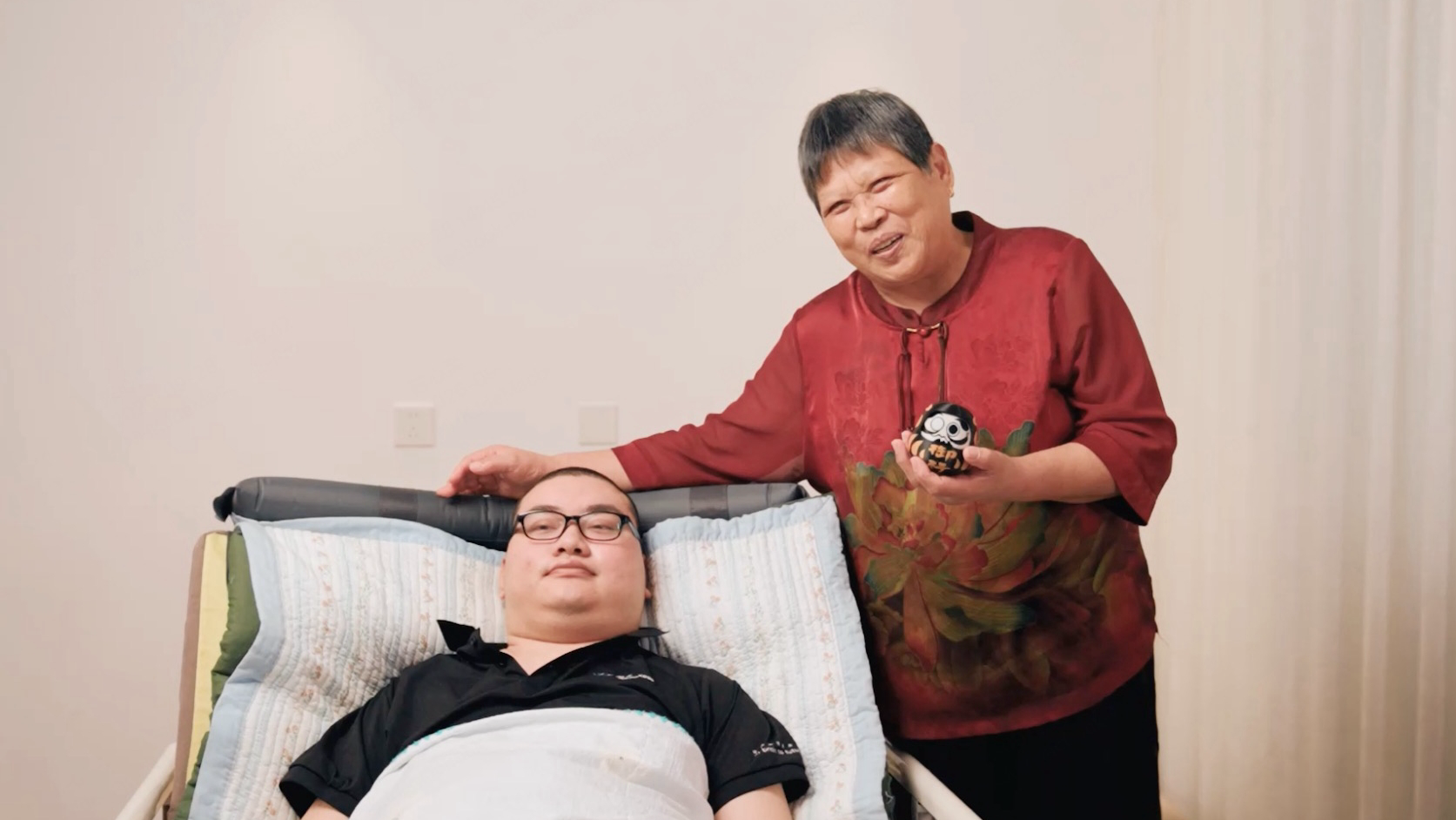
Jia and his grandmother showcase the 3D-printed figurine created via BCI
This collaborative model was subsequently applied to assistive daily living devices. Addressing the inconveniences of existing tablet finger sleeves, Jia outlined specific design requirements based on his own user experience. With the aid of digital design and 3D printing, he created a lighter, better-fitting custom finger sleeve, improving his touchscreen experience.
From the game character figurine to the personalized finger sleeve, these two practices illustrate the complete pipeline from intent input to AI-assisted generation and digital manufacturing. By coordinating BCI with AI and digital fabrication, the operational barrier from conception to realization is lowered, making ideas selectable, adaptable, and manufacturable.
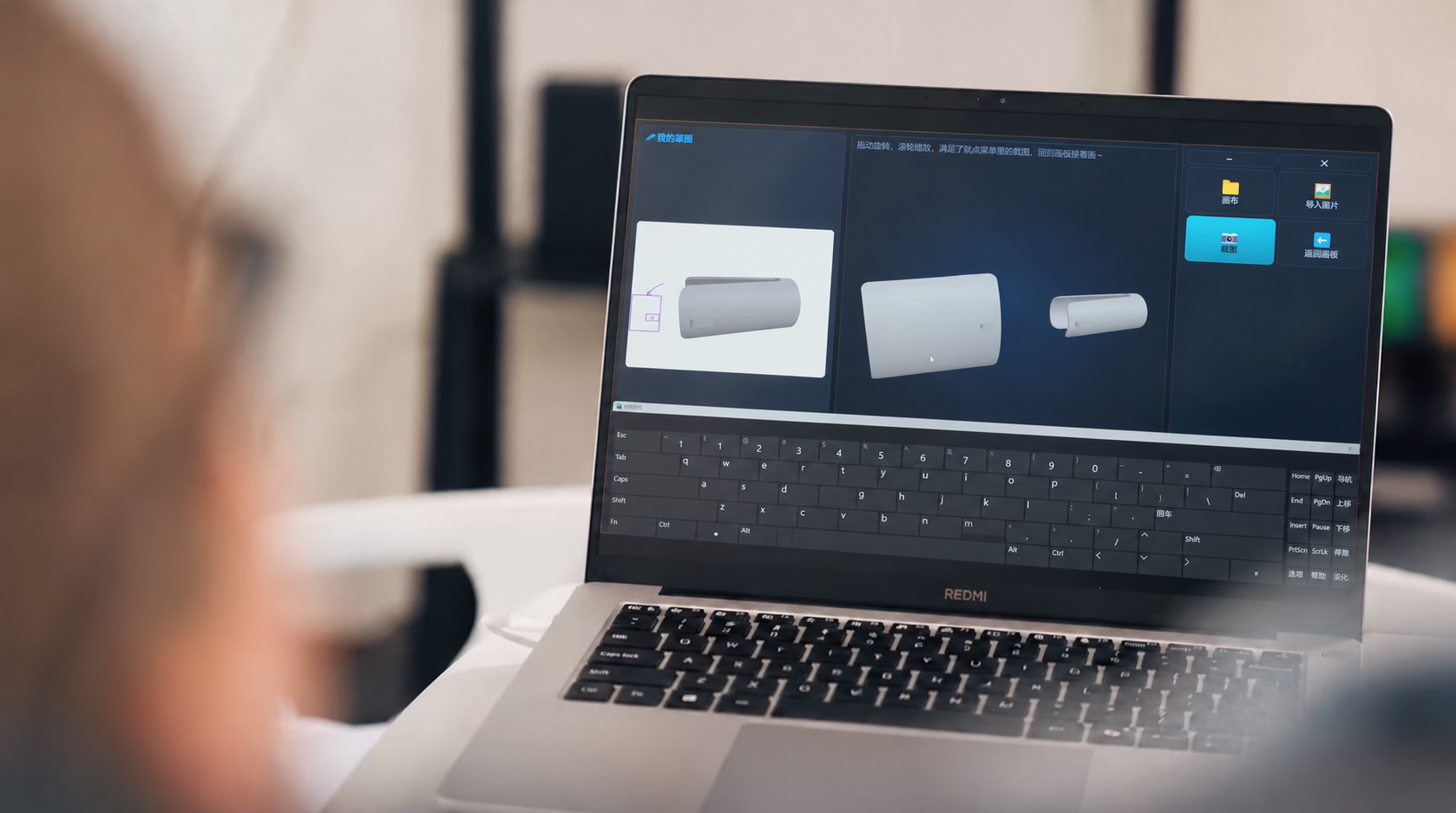
Jia designing a custom finger sleeve via BCI with AI model assistance
What You See Is What You Control: BCI + AI Smart Glasses + IoT Devices
Beyond physical creation, NeuroXess extended its exploration into real-world living environments. In ambient interaction scenarios, the system leveraged the Simultaneous Localization and Mapping (SLAM) capabilities of AI smart glasses for visual perception and dynamic modeling. It intelligently identified the area Jia focused on and presented control options for targeted devices within that area. Once Jia indicated and confirmed his intended action, the control system converted his intent into device commands, accomplishing tasks such as hospital bed adjustment, lighting regulation, and home appliance control.
This interaction loop centers on the BCI: the BCI facilitates the expression and confirmation of operational intent, while the system combines visual perception to identify targets and drive physical device responses. This pathway provides a new alternative for individuals with restricted mobility and marks a transition for BCI from single-device control toward comprehensive smart space connectivity.
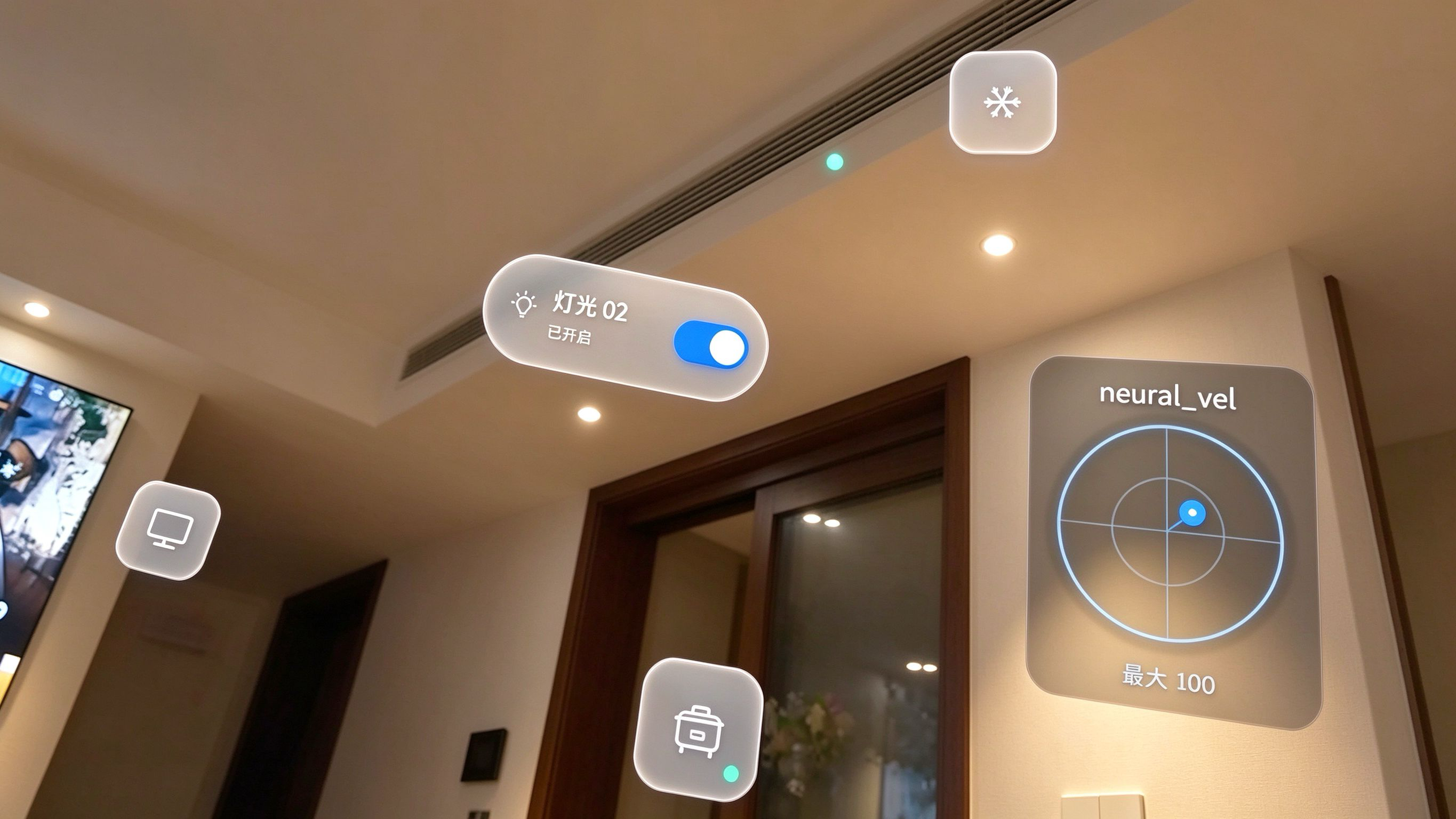
Jia controlling smart home devices via BCI assisted by AI smart glasses
From Point-to-Point Control to System Synergy: Exploring Future Frontiers of BCI-AI Integration
In this exploration, NeuroXess’s “Triple-F” BCI system serves as the foundational bridge between human intent and external systems. The AI large model interprets and expands inputs to generate actionable solutions; 3D printing bridges digital design and physical manufacturing; AI smart glasses provide visual recognition of ambient objects; and the XessOS system connects user intent with external devices, converting it into real-world commands. This synergy of multiple technologies forms a complete pipeline that originates from human intent, passes through intelligent understanding, concept generation, digital processing, and system execution, and ultimately acts upon the physical world.
“What you think is what you get” and “what you see is what you control” are not isolated capabilities, but extensions of the same underlying capacity across different scenarios—connecting human intent to AI and diverse external tools, extending from digital space into the physical world.
Tiger H. Tao, Founder, CEO, and Chief Scientist of NeuroXess, stated: “The future of brain-computer interfaces should not be limited to controlling a single screen or device with thought alone. Instead, it should empower human intent to call upon AI, connect with tools, and ultimately act upon the physical world. Humans define goals and make judgments, while AI and machines help turn those thoughts into tangible outcomes. This is the core focus of NeuroXess’s exploration of BCI and AI integration, and it embodies the future envisioned by ‘Creation Without Boundaries’.”
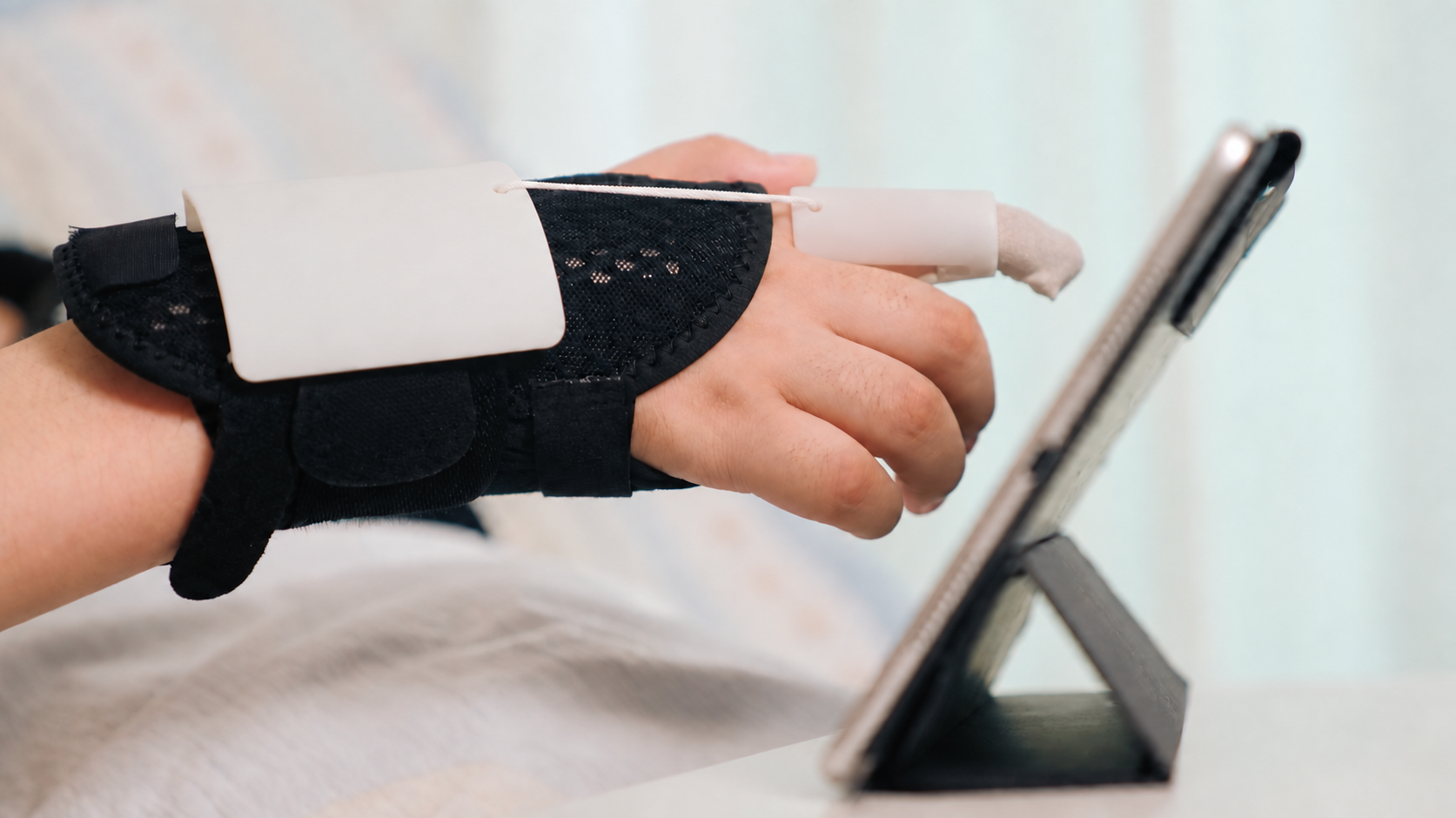
Jia operating a tablet wearing the custom 3D-printed finger sleeve created via BCI
Guided by the vision of “empowering humanity with AI capabilities, surpassing human physical limits, and breaking through the boundaries of human survival and cognition,” NeuroXess remains anchored in clinical needs and patient value. The company continues to advance the coordinated growth of core BCI technologies, AI capabilities, and external application ecosystems, exploring further possibilities for BCI to bridge the digital and physical realms.
Tech for Good, Creation Without Boundaries.